|
Chemicals
COST AND TIME EFFICIENT USE OF GAS
CHROMATOGRAPH EQUIPMENT The Research and Development Department of a large Southern producer of chemicals was searching for a way to utilize their gas chromatograph
equipment in a more cost and time effective way. The company uses gas chromatograph equipment to analyze and document the various chemical constituents of the proprietary chemicals that the company formulates.
The hot gas sample would heat the injection port on the gas chromatograph. If samples were drawn on a
continuing basis without allowing the injection port to cool down, the sample drawn through the hot injection port
would become progressively hotter and would not give an accurate representation of the constituent mix of the gases in the batch. This would create a potential for rejection of the entire batch.
The Research and Development Department had a limited number of gas chromatographs. This meant that
production lagged because of the inability of the department to draw and document batch samples in a time
efficient manner. In order to ensure gathering of completely accurate data, 20 minutes was required to elapse between samples to allow for passive cooling of the injection port.
The manufacturer was aware that forced cooling of the injection port on the gas chromatograph would greatly
improve their efficiency. Cryogenic cooling is normally the ”classic fix” in the industry but the company was trying
to avoid using cryogenics because the equipment is bulky and the cooling process creates personal injury and cost concerns.
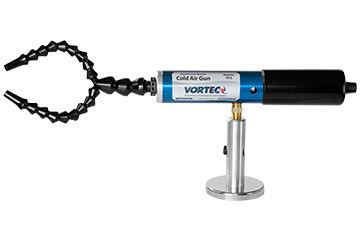
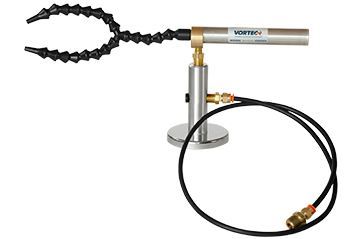
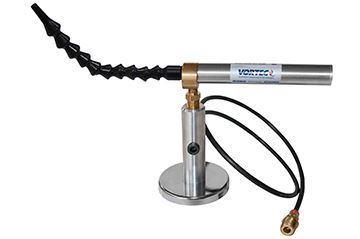
SOLUTION: In order to satisfy both safety and cost requirements, the company purchased model 610 Cold Air Gun to cool the injection ports on the equipment. The R&D technician set up the model 610 Cold Air Gun to cool
the injection port plus provide a cool airflow to the instrumentation after discharge of the sample. The company was able to immediately cut 15 minutes from the cooling cycle, saving a full 2 hours per 8 hour shift.
SUMMARY: What do you think the company thinks about their 25% increase in production?
|